How to Maximize LinkedIn for ChatGPT: An Employer Brand Guide

When candidates ask ChatGPT "What's it like to work at [your company]?", where does the answer come from? Increasingly, it comes from LinkedIn. But not all LinkedIn content is created equal.
The Rise of AI-Powered Employer Research
Job seekers are changing how they research employers. Instead of scrolling through dozens of Glassdoor reviews or parsing corporate career sites, they're asking AI. ChatGPT, Perplexity, and Google's AI Overviews now synthesize employer information instantly, pulling from sources across the web and citing them in their responses.
For employer brand professionals, this creates a new imperative: optimize your content not just for human readers, but for the AI systems that increasingly mediate how candidates discover and perceive your company.
LinkedIn sits at the center of this shift. It's already the primary platform for professional content, and AI models treat it as an authoritative source for employer-related queries. Our analysis of what sources AI actually references for employer brand found that LinkedIn is one of four key pillars—alongside career sites, review platforms, and news coverage.
But here's what most employer brand teams don't realize: the type of content you publish on LinkedIn dramatically affects whether AI will cite you.
Pulse Articles Outperform Regular Posts by 2x
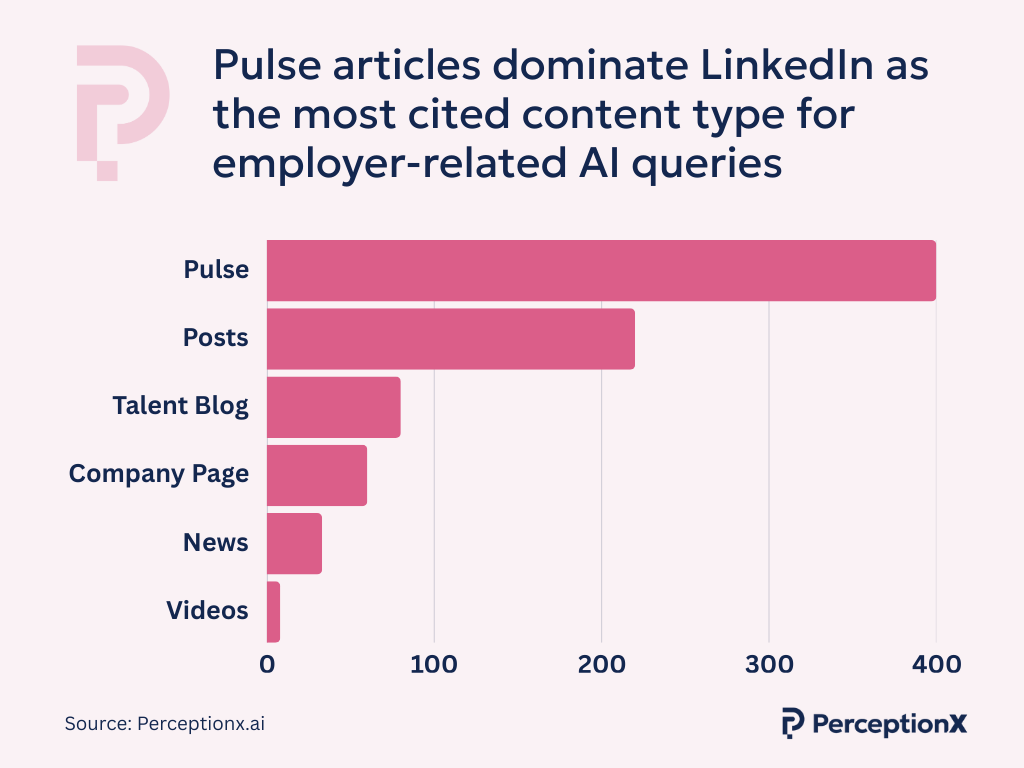
Our analysis of AI citation patterns reveals a striking disparity. LinkedIn Pulse articles—the platform's long-form publishing format—are cited 2 times more frequently than regular LinkedIn posts in AI responses to employer-related queries.
Why the gap? AI models favor depth. A 280-character post about your company culture provides a soundbite. A 1,500-word Pulse article exploring your approach to employee development, complete with specific examples and outcomes, gives AI systems the substantive content they need to formulate comprehensive answers.
This isn't about gaming an algorithm. It's about recognizing that AI models are trained to identify and surface authoritative, detailed content. Pulse articles structurally deliver what these systems are looking for. As recent LinkedIn SEO research confirms, LinkedIn Articles rank quickly in both LinkedIn and Google search results—and unlike regular posts, they stay discoverable over time.
What AI Models Are Actually Citing
Beyond the Pulse vs. post divide, our data shows clear patterns in what LinkedIn content gets picked up:
Company Life Pages matter. When AI responds to questions about what it's like to work somewhere, it frequently cites LinkedIn's dedicated "Life" tab content. If your company's Life page is sparse or outdated, you're missing a key citation opportunity.
LinkedIn's editorial content carries weight. Articles from LinkedIn News, Top Companies lists, and the Talent Blog get cited regularly. Getting featured in these publications—or being mentioned in them—extends your reach into AI responses.
Personal profiles get cited too. When employees publish thoughtful content about their experience at your company, AI models notice. Employee advocacy isn't just about reach anymore; it's about building a distributed network of citable content. Research on LinkedIn employer branding shows that employee-shared content consistently outperforms company page posts—and this extends to AI citation patterns.
A Framework for AI-Optimized LinkedIn Content
Based on these patterns, here's how employer brand teams should approach LinkedIn:
Shift resources toward Pulse. If you're currently splitting effort equally between posts and long-form content, reconsider. The 2x citation advantage of Pulse articles suggests a reallocation is warranted. This doesn't mean abandoning posts—they serve different purposes—but your flagship employer brand content should live in Pulse format.
Write for citation, not just engagement. Traditional LinkedIn advice optimizes for likes and comments. AI optimization requires different thinking. Include specific, factual claims about your workplace: concrete benefits, named programs, measurable outcomes. These become the excerpts AI models pull into their responses. For a deeper dive into tracking this, see our guide on how to measure your employer brand with AI.
Update your Company Life page quarterly. Treat it as a living document, not a set-and-forget asset. Fresh content signals relevance to AI systems and ensures the information being cited is current.
Activate employee voices in long-form. Encourage employees—especially those in high-visibility roles—to publish Pulse articles about their experiences. A VP of Engineering writing about your technical culture creates citable content that no amount of corporate messaging can replicate.
Target the questions candidates actually ask. AI models respond to queries. Think about the specific questions candidates ask about your company and create Pulse content that directly addresses them. "What's the interview process like at [Company]?" is a question you can answer preemptively with authoritative content. Our guide to prompting AI for employer branding covers the exact questions candidates are asking across sentiment, competitive positioning, and visibility.
LinkedIn's Growing Influence in AI Responses
When we started PerceptionX, LinkedIn featured far less prominently in AI citations than we expected. Given its dominance in professional content, we assumed it would be a top source from day one. It wasn't.
That's changing. Our data shows LinkedIn citations increasing steadily as AI models evolve and expand their source base. The platform's authority in the professional space is translating into growing influence over AI-generated employer narratives.
This trajectory matters for employer brand teams. LinkedIn isn't just catching up—it's positioned to become one of the most important channels for shaping how AI represents your company to candidates. The teams investing in LinkedIn content now are building assets that will compound in value as AI citation rates continue to climb.
The Opportunity Window
We're still early in the shift toward AI-mediated employer research. Most companies haven't recognized that their LinkedIn strategy needs to evolve, which creates an opportunity for those who move first.
The employer brands that establish a strong Pulse presence now will build a content library that AI models learn to cite consistently. Those that continue treating LinkedIn as purely a social platform will find themselves increasingly invisible in the conversations that matter most—the ones happening between candidates and their AI assistants.
Our Visibility Index already shows this playing out: some brands with strong traditional employer marketing barely show up in AI responses, while a few "quiet" employers are punching far above their weight on specific themes candidates care about.
The question isn't whether AI will reshape employer branding. It's whether you'll adapt your content strategy before your competitors do.

Find out how AI is shaping your employer brand — and what you can do about it.