The 10 Best Employer Branding Tools, Software and Platforms for 2027
Employer branding tools are the software employer branding teams use to shape, share and measure how a company is seen as a place to work. They cover employee advocacy, career pages, reviews, content creation, job descriptions, feedback and, increasingly, how AI assistants describe you to job seekers. No single tool does all of it, so the top employer branding tools work as a stack: each one does one job well, and the stack together supports your employer branding strategy.
This guide groups ten employer branding tools by the job they do, explains what each one is good for, shows how to build an employer branding toolkit that fits a lean team or an enterprise team, and ends with a buyer's guide to employer branding software for budget season. For a narrower list of AI-specific software, see our guide to AI employer branding platforms, and for tools that monitor reviews and what AI says about you, see the best employer reputation management software.
What are employer branding tools?
An employer brand is what potential candidates, current employees and the market believe about you as an employer. Employer branding tools help you influence that belief and check whether your employer branding efforts are working. They fall into six groups:
- Measurement: tools that show how your brand reputation looks from the outside, including in AI answers.
- Employee advocacy: tools that help current employees share authentic employee stories and act as brand ambassadors.
- Reviews and reputation: employer review sites where current employees and former staff describe company culture.
- Content creation: design, video and live tools for employer branding content and employer branding campaigns.
- Job descriptions and job ads: tools that keep job postings clear, consistent and on brand.
- Feedback: survey tools that test your employer value proposition with employees and candidates.
Employer branding software and employer branding platforms are often used as the same term, and you will see employer branding platforms compared with single tools in most buying guides. In practice, a platform usually bundles several of these jobs, such as a career site builder, a candidate CRM and content management, while a tool does one job. Most teams use both.
Why employer branding tools matter more in 2027
Candidates now research employers in places you do not control, and the first answer they read is often written by AI. In a PerceptionX survey of active job seekers across seven countries, 89% of AI-using job seekers used ChatGPT, and 72% used AI before deciding whether to apply. Those answers are assembled from reviews, LinkedIn, Reddit, YouTube and directories, not just your career pages.
That changes what an employer branding toolkit is for, and what employer branding teams need from their software. It is no longer enough to publish good content on your own social media accounts. The tools you choose need to feed the sources AI and candidates trust, and at least one of them needs to tell you whether the story is landing. In October 2026, PerceptionX data showed Glassdoor in 63% and Indeed in 44% of AI answers to questions about what it is like to work at a specific employer, which is why review tools sit near the top of this list. A good employer branding strategy now covers your own channels, the sources AI reads and a way to measure both.
Tools that attract talent through your own channels pay off only when they sit inside wider recruitment strategies that account for what candidates read elsewhere.
The best employer branding tools at a glance
| Tool | Category | Best for |
|---|---|---|
| PerceptionX | Measurement and AI visibility | Shows how AI assistants describe you to candidates, by market, role and model |
| LinkedIn Talent Solutions | Employee advocacy and career pages | Reaching candidates through employees and a company career page |
| Glassdoor | Reviews and reputation | Monitoring and responding to employee reviews |
| Indeed | Reviews and job distribution | Company pages, reviews and job listings in one place |
| YouTube | Video and employee stories | Day in the life videos and recruiter content that lasts |
| Canva | Content creation | On brand graphics for lean teams without designers |
| StreamYard | Live events | Recruiter Q&As and virtual open days |
| Community listening | Hearing what employees and candidates say unprompted | |
| Textio | Job descriptions and brand language | Clearer, more inclusive job ads and recruiting messages |
| SurveyMonkey | Employee and candidate feedback | Pulse surveys that test the employer value proposition |
Measurement and AI visibility: the tool that shows if the rest work
1. PerceptionX
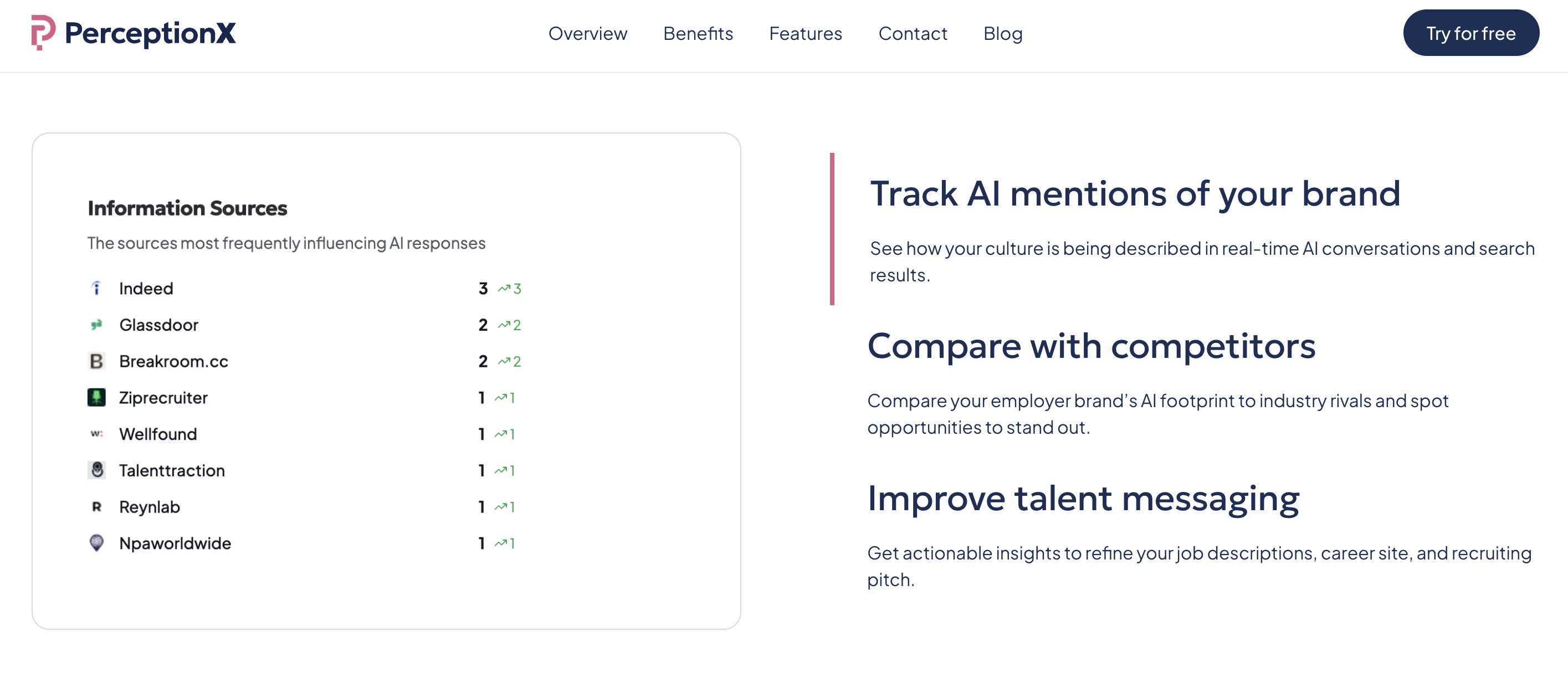
What it does: PerceptionX is an employer reputation partner. Its technology measures how ChatGPT, Perplexity, Google AI Mode and Google AI Overviews describe your company to potential candidates. It runs the questions candidates ask, by market, job function and model, and shows how often AI recommends you when candidates ask which employers to consider, how positively it describes you and which websites the answers come from. Our scores are independent: they come from what AI actually says, not from what employers tell us.
Measurement is only the start: every finding comes with recommendations on what to change, and practitioners who have measured employer brand for years help your team act on them.
Why it matters: every other tool on this list feeds the answer potential candidates get. PerceptionX measures that answer and shows which sources shaped it, so you can see which of your employer branding efforts moved perception and which did not. That turns brand perception from a guess into something you can track over time.
Best for: enterprise teams hiring across several countries and functions, and any employer brand team that needs to report results to leadership. The method behind the scores is explained in the guide to the Employer Perception Score.
Employee advocacy and employee generated content
2. LinkedIn Talent Solutions
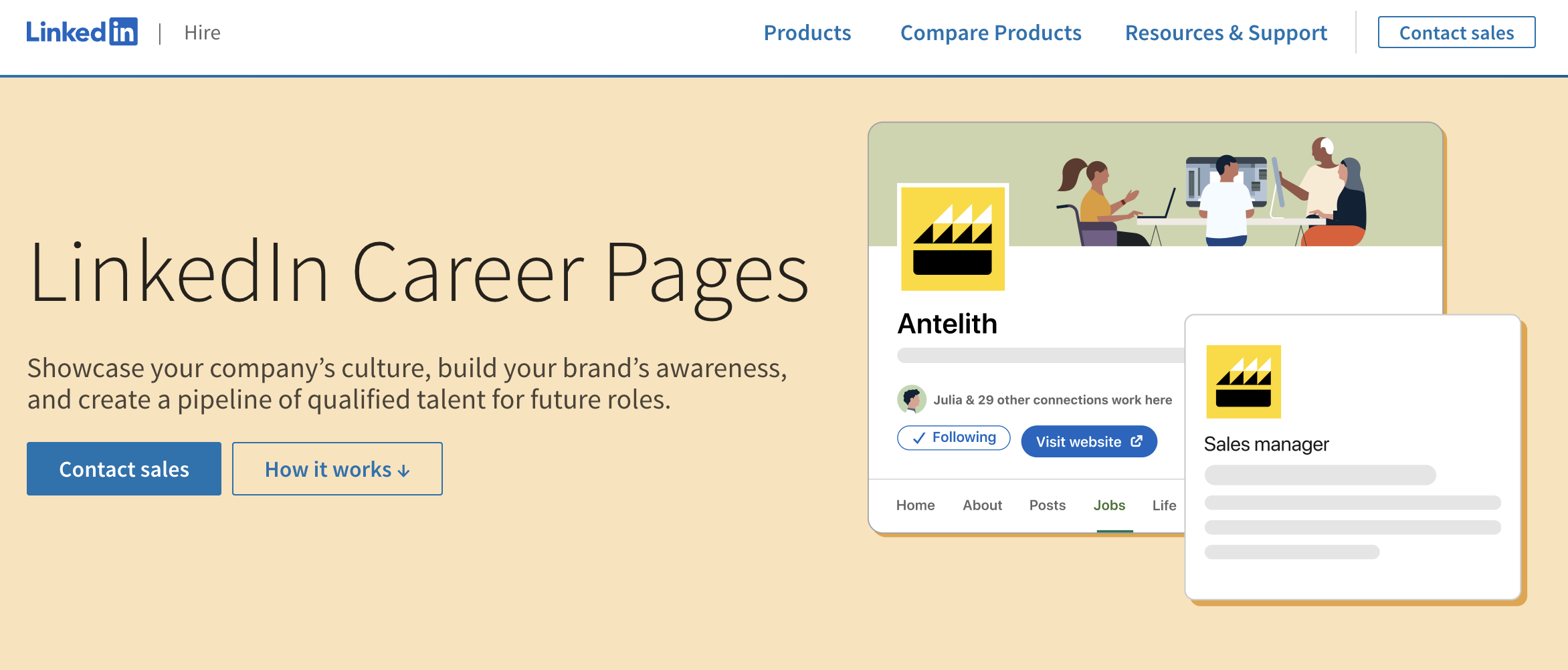
What it does: LinkedIn career pages let you show company culture, employee stories and open roles to different talent segments, while employees share employee generated content on the network candidates already use. LinkedIn is also one of the sources AI cites most: PerceptionX data shows it in 31% of AI answers when candidates ask which employers to consider.
Why it matters for employee advocacy: posts by people carry more weight than posts by the company page. Encourage employees to write about real projects, teams and career moves, and give them topics rather than scripts. A small group of brand ambassadors who post regularly will do more for candidate engagement than a large group who share the same campaign asset.
Your own employees are the most credible voice you have. The aim is to turn employees who already talk about their work into brand advocates, not to ask everyone to post.
If you run a structured programme, an employee advocacy platform built for this job can schedule employee content, suggest posts and track reach and earned media value across social media channels. Treat it as part of your wider social media strategy, not a replacement for employees writing in their own words.
Best for: employee advocacy, professional hiring and reaching passive candidates and top talent. Pair it with an internal channel, such as Slack or Microsoft Teams, where you share ideas and celebrate employees who create content.
3. YouTube
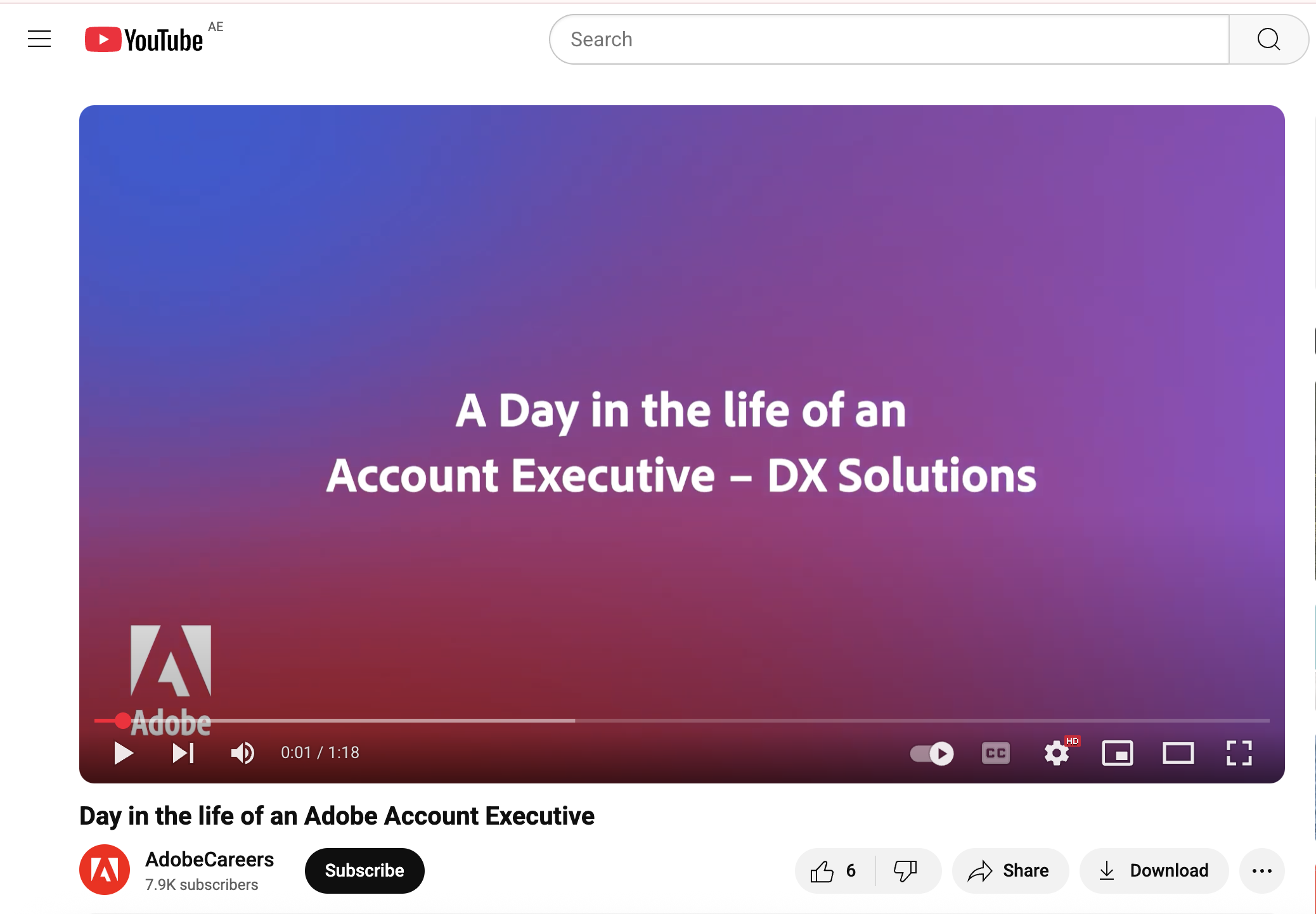
What it does: YouTube hosts the video content candidates search for: day in the life videos, team intros, interview tips and video testimonials from current employees. Unlike most social media channels, a good video keeps working for years.
Why it matters: video is how many candidates judge company culture, and AI assistants cite it. In PerceptionX data, YouTube appears in 18% of AI answers to discovery questions, and in roughly three in ten in markets such as Brazil, Mexico and South Korea. If you hire there and have no video presence, you are missing from a source that carries real weight.
Best for: authentic employee stories, campus hiring and markets where video is a primary research channel. Short clips also work across other social media channels and on the career site, and they let prospective candidates see the people and places behind a role before they apply.
Reviews and brand reputation
4. Glassdoor
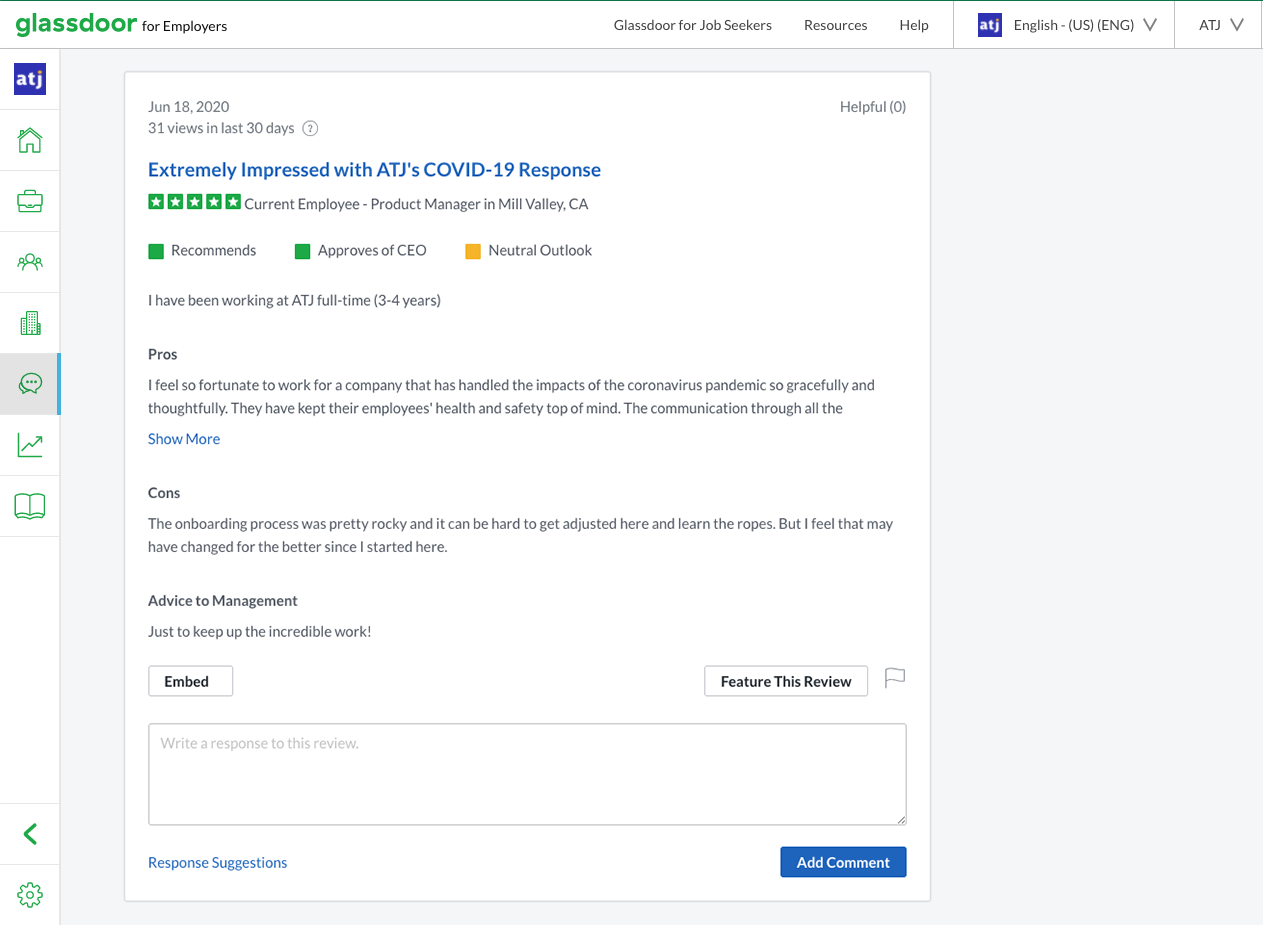
What it does: Glassdoor for Employers lets you claim your company profile, add photos and benefits, monitor reviews and respond publicly.
Why it matters: it is the review source candidates and AI lean on most when they already have you in mind. Responding to reviews, positive and negative, shows potential employees that feedback is heard. Treat review themes as an early warning on employee engagement and employee retention, because they show where company culture and company branding have drifted apart.
Best for: reputation management in English-speaking markets and India. In Germany and Switzerland, kununu matters as much or more; in India, AmbitionBox is a major local source. Check which review sites matter in each market where you hire.
5. Indeed
What it does: Indeed is a job board that combines job listings, company pages and employee reviews. Your company page, salary data and reviews sit next to your job ads, so candidates see the employer and the role together.
Why it matters: Indeed appeared in 44% of AI answers about what it is like to work at a specific employer in PerceptionX data for October 2026, and Indeed company profile pages are being cited more often than they were in the summer. Keep the company page current and its brand presence strong, make sure job ads carry real detail on pay and the hiring process, and use job alerts and job distribution to reach qualified applicants.
Best for: high-volume hiring, hourly roles and teams that want reviews and job postings managed in one place.
Content creation tools for employer branding
6. Canva
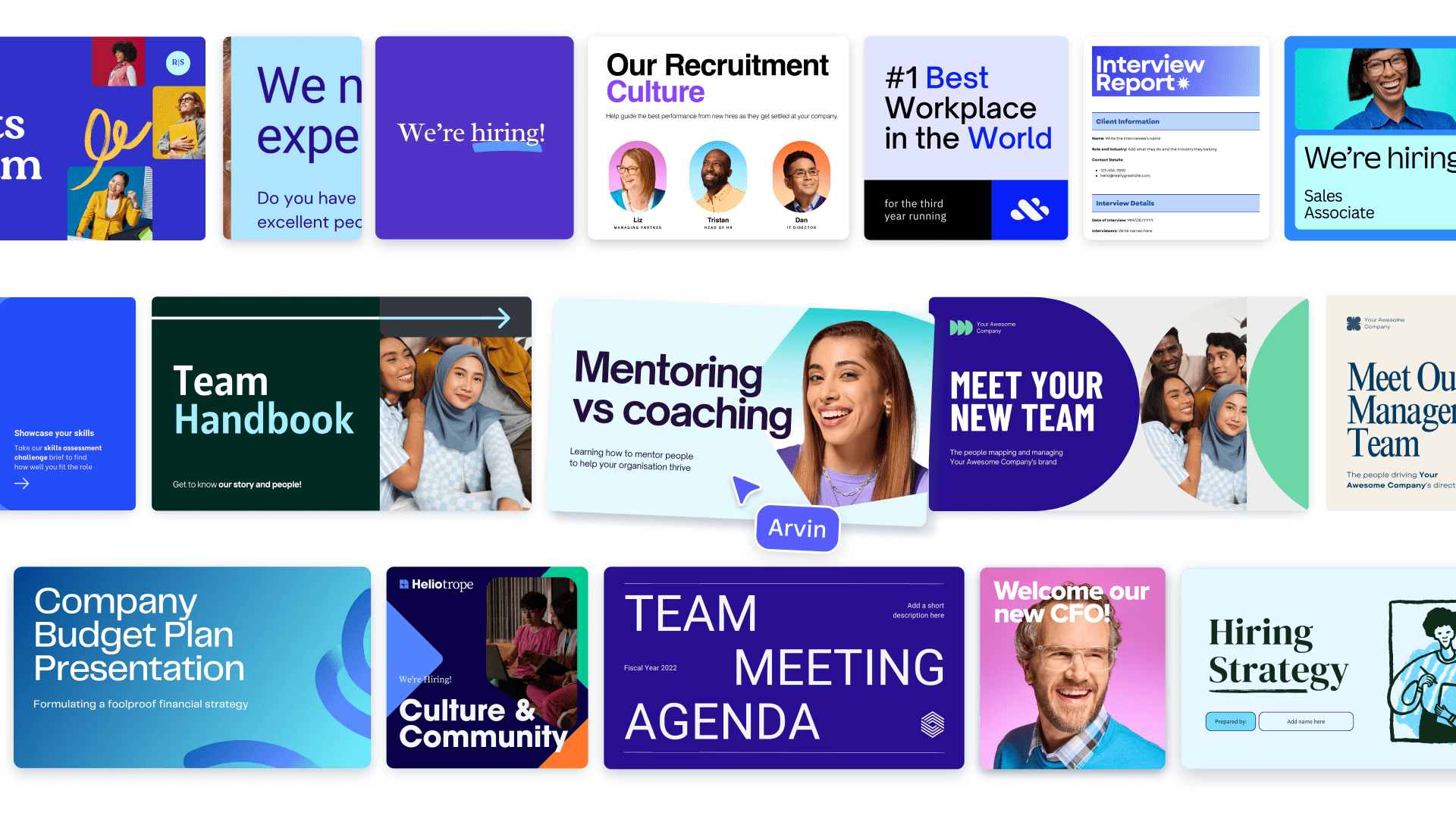
What it does: Canva lets HR and talent acquisition teams design social posts, job graphics, landing pages, presentations and short videos without a designer. Brand kits keep colours, fonts and logos consistent across everyone who creates content.
Why it matters: brand consistency is hard when many people produce employer branding content. Shared templates help you maintain brand consistency and keep the brand voice steady, while letting recruiters and employees create content fast.
Best for: small teams, recruiters who produce their own content and multi channel campaigns that need many formats quickly.
7. StreamYard
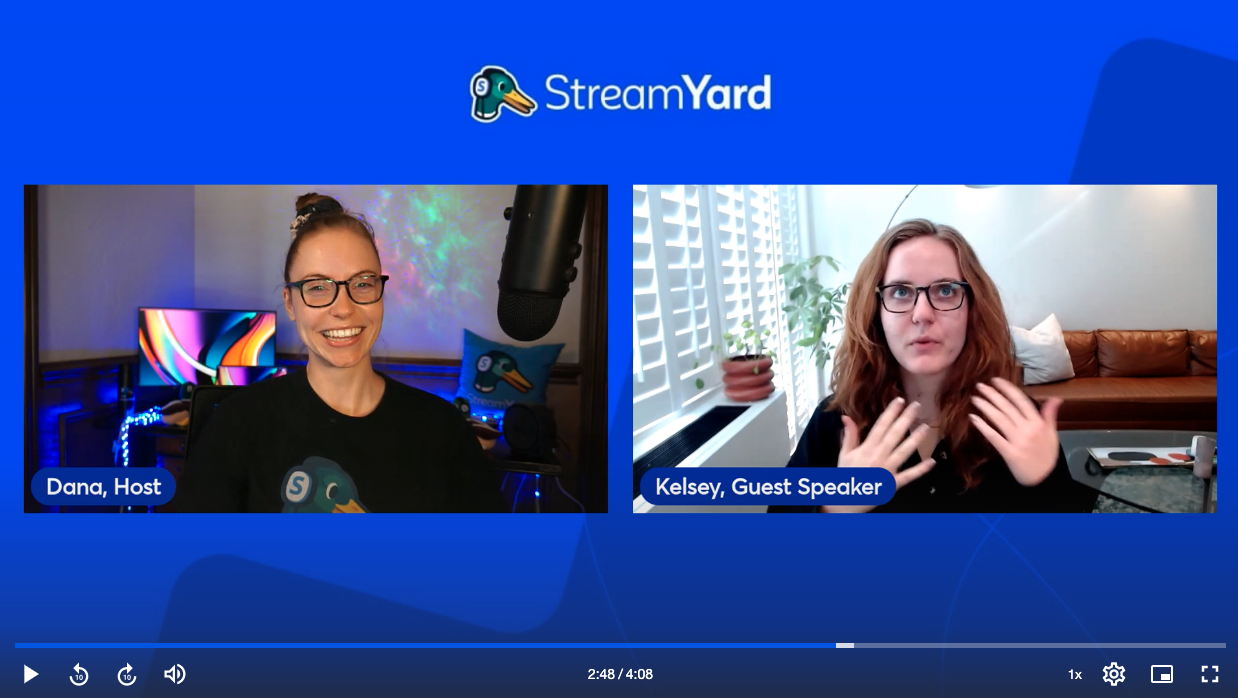
What it does: StreamYard runs branded live streams and recorded sessions, and can broadcast to several platforms at once.
Why it matters: live Q&As with recruiters, hiring managers and employees answer the questions candidates ask about the hiring process and culture in their own words. Recordings become evergreen content, and live sessions are a practical alternative when in person events are not possible. They also lift candidate engagement, because potential candidates can ask questions directly.
Best for: virtual open days, graduate hiring and leadership Q&As.
Community listening
8. Reddit
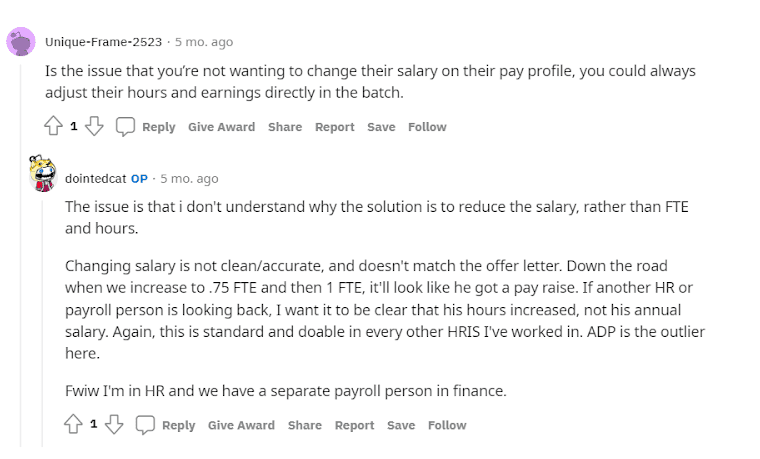
What it does: Reddit is where employees and candidates discuss pay, managers, workload, work life balance, workplace culture and interviews openly. It is not a tool you buy, but it is one you need to monitor.
Why it matters: Reddit appears in 21% of AI answers to discovery questions in PerceptionX data, and far more in some markets. You cannot manufacture a presence there and should not try. You should know what is being said, whether it is accurate, and which concerns keep repeating. Our guide to Reddit in employer branding covers how to do it well.
Best for: spotting reputation risks early and learning which questions to answer on your career site.
Job descriptions and brand language
9. Textio
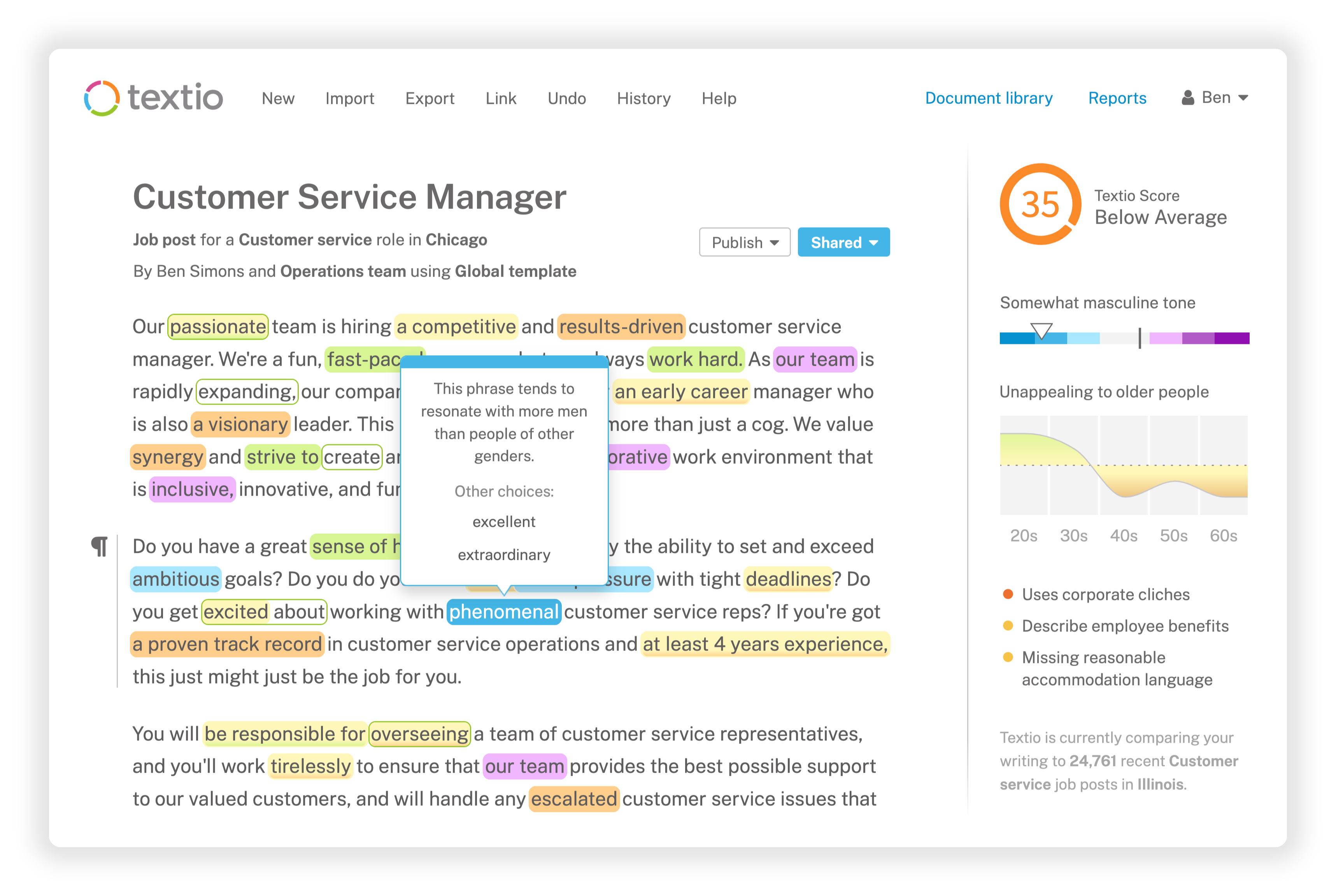
What it does: Textio analyses job descriptions, recruiting emails and other hiring content, and suggests clearer, more inclusive and more on brand wording.
Why it matters: job ads are the largest body of text candidates and AI read about you. Clear, specific job ads with pay, team, location and what success looks like attract top talent and the right audience and give AI something accurate to quote.
Consistent, on brand language across job posts, recruiting emails and the career site also stops candidates and AI from finding different versions of the same role.
Best for: any recruiting team writing many job postings that wants a consistent brand voice and fewer vague ads.
Employee and candidate feedback
10. SurveyMonkey
What it does: SurveyMonkey runs employee pulse surveys, candidate experience surveys and new hire surveys.
Why it matters: your employer value proposition only works if employees recognise it. Ask current employees whether the company lives up to its values, ask new hires whether the job matched what they expected, and ask candidates where they researched you. The answers show where your employer brand and the employee experience diverge.
Best for: testing the employee value proposition, measuring candidate experience and finding new culture stories to tell.
Your career site: the hub every employer branding tool points to
Every tool above sends people somewhere, and that somewhere is usually your career site. It is the one source you fully control, and both candidates and AI check it for practical detail. A career site that is thin or out of date undermines everything the rest of the stack does.
A strong career site does five things:
- States what makes the company unique in specific terms: the work, the teams, the locations and the company's mission, not general claims about company values.
- Shows employee testimonials and culture stories from real people, in their own words, including video testimonials where you have them.
- Explains the hiring process step by step, with realistic timelines, so candidates know what to expect.
- Speaks to different talent segments with dedicated landing pages for graduates, engineers, sales or other groups you hire at volume, so each talent audience finds answers written for it.
- Keeps facts consistent with job ads, LinkedIn, review site profiles and social media accounts, so AI and candidates see one story.
Most employer branding platforms include a career site builder, and many applicant tracking systems offer one too. Whatever you use, review the career site every quarter. Our guide on why your career site is now your biggest employer brand asset covers what AI looks for.
What to look for in an employer branding platform
If you are evaluating an employer branding platform rather than single tools, compare platforms on six points. These are the questions that separate a useful employer branding platform from an expensive content library.
- Coverage: does the employer branding platform cover career site, candidate CRM, content creation, employee advocacy and analytics, or only some of them?
- Employee content: how easily can employees create and share content, and can the brand team approve it without slowing it down?
- Brand consistency: does the platform keep brand messaging consistent across markets and languages, and how much brand control does the central team keep over local content?
- Integrations: does it connect to your applicant tracking system, social media channels and job distribution?
- Measurement: does it report outcomes such as candidate engagement and quality of hire, or only views and clicks? Does it show how candidates and AI describe your company's reputation?
- Fit for your team: can a small team run it, or does it need dedicated administrators?
When you have employer branding platforms compared side by side on these points, the right choice is usually obvious. A platform that cannot show whether perception changed should be paired with a measurement tool.
Employer branding platforms compared with single tools
Some teams start with an all-in-one employer branding platform that bundles a career site, candidate CRM, content management and analytics. Others build a stack of single tools like the ten above. Here is how the two compare.
- All-in-one platform: one login, consistent data and easier governance for large employer branding teams. The trade-off is cost, longer setup and less flexibility in each individual job.
- Stack of tools: faster to start, cheaper for lean teams and easy to change. The trade-off is that data sits in several places and someone has to hold the stack together.
Whichever you choose, check that it covers measurement. Most platforms report on what you published, such as clicks, views and applications. Few report on what candidates actually hear about you from AI and review sites, which is now where perception forms.
How to choose employer branding tools for your team
- Start with the gap. Measure how candidates and AI describe you today, by market and role. The gap between that and your employer value proposition tells you which tools you need first.
- Match tools to the sources that matter. If review sites dominate the answers in your markets, invest in review management. If you are missing from discovery answers, focus on LinkedIn, directories and employee content.
- Size the stack to the team. Smaller teams should pick three or four tools they will actually use: one for measurement, one for content creation, one for employee advocacy and one for reviews. Larger organisations can add a platform and local tools for each market.
- Check how each tool supports employees. Good employer branding software makes it easy for employees to share authentic content. If a tool only serves the brand team, it will not move perception far.
- Agree how you will measure success. Track AI visibility and sentiment, review sentiment, candidate engagement, quality of qualified applicants and time to fill. Report them in a way that links your employer branding strategy to hiring results and the company's reputation. That is how employer branding earns its budget alongside other recruitment efforts. Our guide to employer branding metrics shows how to calculate each one.
Buying employer branding software: a guide for budget season
Most teams buy employer branding software once a year, when next year's budget is set. A structured buying process avoids the two most common mistakes: buying a platform that duplicates tools you already have, and buying one that cannot show whether anything changed.
Questions to ask every employer branding software vendor
- Which jobs does it do, and which does it leave to other tools? Ask for a clear map against the six groups above, so you can see the overlap with your current stack.
- What will it show us in the first 90 days? Good vendors can describe the first results in concrete terms, such as a baseline by market or a live career site, not just "insights".
- How does it measure outcomes? Ask which metrics it reports, how they are calculated and whether it can show change in how candidates and AI describe you, not only clicks and views.
- Which markets and languages does it cover? If you hire in several countries, check it handles local review sites, local job platforms and every language you recruit in.
- What does it connect to? Confirm integrations with your applicant tracking system, HR systems, social channels and single sign-on before you sign.
- How is candidate and employee data handled? Ask where data is stored, who can access it and how the vendor meets the privacy rules in each market where you hire.
What to see in a demo
Ask the vendor to run the demo on your company, not a sample account. Ask to see a real report for one of your priority markets, how an employee would create and share content, and what the brand team does each week to run it. If the demo only works on example data, expect the setup to take longer than promised.
How employer branding software is priced
Pricing models vary, so compare total cost over the contract rather than the headline price. Common models include annual subscriptions by number of users, by employee count, by number of markets or brands covered, or by volume of content and reports. Many enterprise platforms add one-off setup or implementation fees and charge separately for extra markets, languages or integrations. Ask for the full cost of covering every market you plan to hire in next year, and plan it as part of your employer branding budget.
Red flags when buying employer branding software
- No baseline. If the tool cannot show where you start, it cannot show progress.
- Vanity metrics only. Reports built on impressions and likes will not survive a budget review.
- One market treated as the world. A tool that only covers global review sites will miss the local platforms candidates use in many countries.
- Long setup before any value. If nothing useful arrives for six months, the renewal conversation starts before results do.
Employer branding software evaluation checklist
| Criterion | What good looks like | Question to ask |
|---|---|---|
| Fit to the gap | Solves the biggest gap your baseline shows | Which of our problems does this fix first? |
| Measurement | Reports perception and hiring outcomes, not only activity | How will we know it worked? |
| Market coverage | Covers every country and language you hire in | Which local sources do you cover in our markets? |
| Integrations | Connects to your ATS, HR systems and channels | What do we need to build or buy to connect it? |
| Time to value | First useful results within one quarter | What will we have after 90 days? |
| Total cost | Full cost known for every market and user | What will year one cost in total? |
| Data and privacy | Clear data storage, access and compliance by market | Where is our data held and who can see it? |
If you are also buying AI tools for recruiting, apply the same checklist. Those tools need extra checks too, from bias testing to candidate notices.
Building your employer branding toolkit
For lean teams: PerceptionX or a regular manual AI audit for measurement, Canva for content creation, LinkedIn for employee advocacy and Glassdoor or Indeed for reviews. That covers the sources candidates and AI use most, with a small budget.
For enterprise employer branding teams: add local review sites for each market, YouTube for video, Textio for job descriptions at scale, a survey tool for the employer value proposition and a structured employee advocacy programme. Measure by market and job function, because what works in one country often fails in another.
Great talent chooses employers on evidence. Whichever stack you build, the principle is the same: use the tools to help current employees tell true, specific stories about the work, keep the facts consistent across every channel, and measure whether the story candidates hear has changed. Tools amplify an employer brand. They do not replace a good place to work.
For the fundamentals, read what is employer branding. For next year's priorities, see our employer reputation trends for 2027.
Frequently asked questions
What are the best employer branding tools?
The best employer branding tools depend on the job you need done. A strong stack usually includes a measurement tool such as PerceptionX, LinkedIn for employee advocacy, Glassdoor and Indeed for reviews, Canva or YouTube for content creation, Textio for job descriptions and a survey tool such as SurveyMonkey for employee feedback.
What is employer branding software?
Employer branding software helps teams build, share and measure their reputation as an employer. It includes career site builders, employee advocacy tools, review management, content creation tools and measurement platforms that track how candidates and AI assistants describe the company.
How much does employer branding software cost?
It depends on the pricing model. Vendors typically charge annual subscriptions by number of users, employee count, markets covered or content volume, and enterprise platforms often add setup fees and charges for extra markets, languages or integrations. Compare the total cost of covering every market you hire in, not the headline price.
Which software is best for employer branding on a small budget?
Lean teams can cover the essentials with a few low-cost tools: Canva for content, LinkedIn for employee advocacy, a free company profile on Glassdoor or Indeed, and a regular audit of how AI assistants describe the company.
How do you choose an employer branding platform?
Start from the biggest gap in how candidates and AI see you, then compare platforms on coverage, employee content, brand consistency, integrations, measurement and fit for your team. Ask each vendor what you will have after 90 days and what year one will cost in total.
How do you build an employer brand?
Define a specific employer value proposition, make sure it matches the employee experience, help current employees share authentic stories, keep career pages and job descriptions detailed and consistent, manage reviews, and measure how candidates and AI describe you over time.
What are the top recruiting tools for employer branding?
For recruiting teams, the tools that do most for the employer brand are LinkedIn for reach, Indeed for job listings and reviews, Textio for job descriptions, and a measurement tool that shows whether candidates hear the story you intend.
How do you measure whether employer branding tools are working?
Track outcomes, not just activity. Useful measures include AI visibility and sentiment, review sentiment, candidate engagement, offer acceptance rate, quality of qualified applicants and time to fill, compared before and after a tool is introduced.

Find out how AI is shaping your employer brand — and what you can do about it.