Best Employer Reputation Management Software and AI Tools for 2027

Employer reputation management software is the set of tools a company uses to monitor, measure and improve what job seekers, current employees and the wider market believe about it as a place to work. It covers employee reviews, employee feedback, social media and, increasingly, what AI assistants tell candidates when they research employers. The best employer reputation tools do three jobs: they show you how you are seen, they help you respond, and they prove whether anything changed.
This guide sets out the best employer reputation management software by category, including the AI employer reputation tools that track ChatGPT, Gemini and Perplexity, and explains how to build a stack that fits your team.
Why employer reputation management matters now
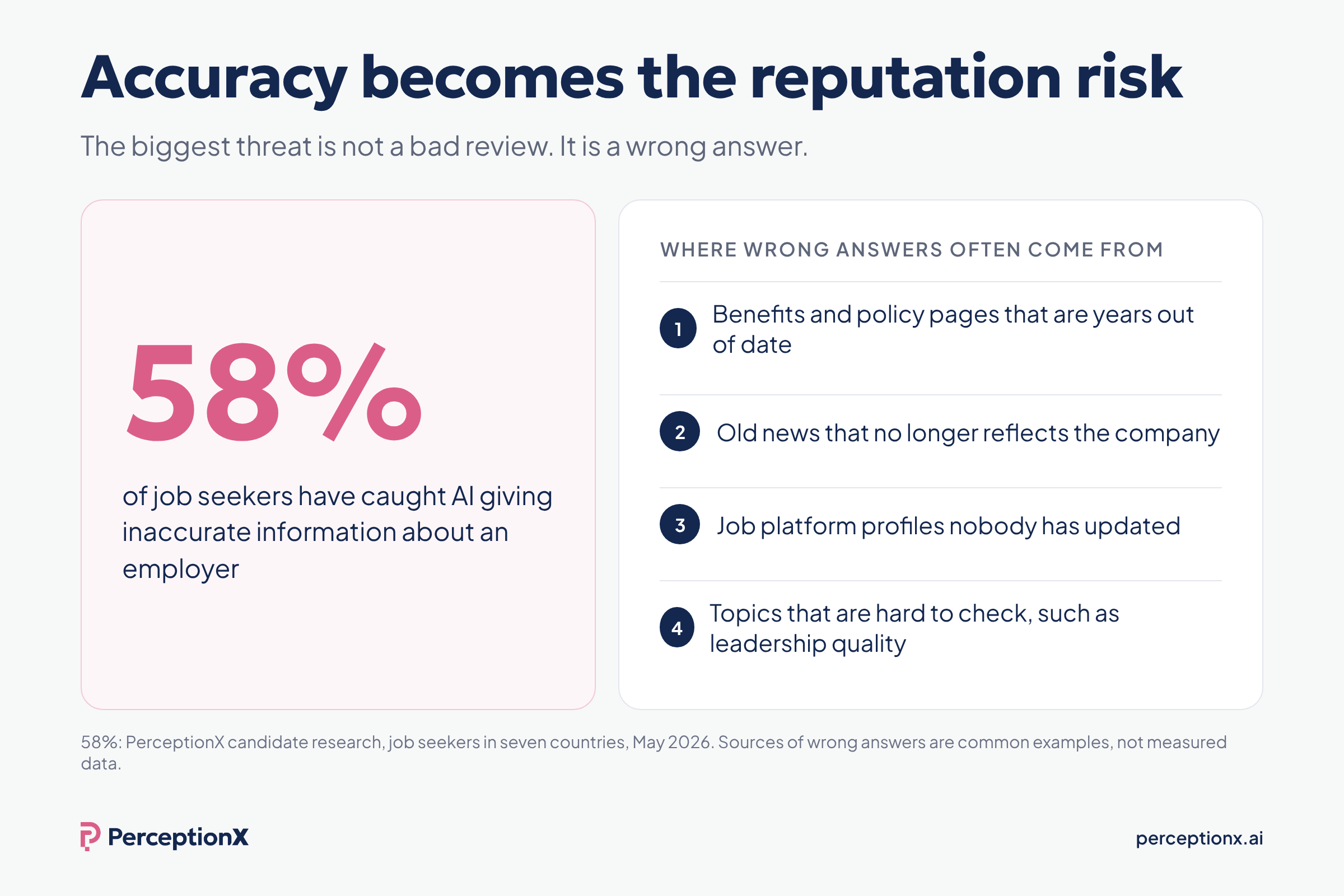
Job seekers research employers before they apply, and more of that research now happens inside AI assistants. In PerceptionX research across seven countries, 96% of job seekers had used AI to research an employer, learn about a role or prepare for an interview, and 58% had caught AI giving inaccurate information about an employer.
Those answers are built from online reviews, job platforms and the employer's own career pages. In October 2026, Glassdoor appeared in 63% of AI answers about what it is like to work at a specific employer, and Indeed in 44%. Employer reputation management is no longer only about responding to negative reviews. It is about managing every source that shapes how current and potential employees see you.

AI employer reputation tools vs online reputation management
Traditional online reputation management tools were built for customer reviews of products and stores. They track star ratings on online review sites and help a business respond to customers. Employer reputation is different: the audience is your workforce and the potential candidates deciding on their next employer, and the sources are employee reviews, job platforms, career pages and AI answers.
That is why AI tools now sit at the centre of employer reputation management. Candidates increasingly ask AI assistants which employers to consider and what working somewhere is really like, and the answer can build or erode credibility before your talent acquisition team is involved. A positive reputation in reviews does not guarantee a positive answer from AI, so the employers that win top talent actively manage both.
What to look for in employer reputation management software
- Monitoring: tracks employee reviews, review volume, social media and AI answers in one place, with alerts for negative employee reviews.
- Measurement: shows brand perception over time, by market and job function, and benchmarks you against industry peers.
- Response: helps your team respond to online reviews quickly and consistently.
- Insight: connects themes in employee feedback, such as workplace culture, career growth or work life balance, to what candidates read.
- Reporting: turns survey data and review data into reports the leadership team will act on.
The best employer reputation tools by category
1. PerceptionX: the best AI employer reputation tool
PerceptionX is the only employer reputation platform built for how candidates now research employers. It shows what ChatGPT, Google and other AI assistants tell job seekers about working for a company: whether they recommend it, what they say about it and which websites those answers come from, in every market and for every type of role. It names the sources behind each answer, from review sites to careers pages, so you know where to act. Our scores are independent: they come from what AI actually says, not from what employers tell us.
Best for: enterprise employers that want to see and manage what AI tells top candidates, and teams that need to report employer reputation like any other business metric. Our guide to how to measure employer reputation explains the method.
2. Glassdoor for Employers: review management
Glassdoor for Employers lets you claim your company profile, add photos, benefits and employee testimonials, monitor anonymous reviews and respond publicly. It is the review site AI leans on most when candidates ask what it is like to work at a company, so an active, accurate profile is one of the highest-value things you can manage.
Best for: responding to negative reviews, tracking review volume and showing that leadership is paying attention.
3. Indeed: company pages, reviews and job postings
Indeed combines employee reviews, salary data, company pages and job postings. Candidates see your reputation next to your job descriptions, so keep the company page current and make sure job postings carry real detail on pay and the hiring process.
Best for: high-volume hiring and employers whose candidates research and apply in the same place.
4. Local review sites: kununu, AmbitionBox and others
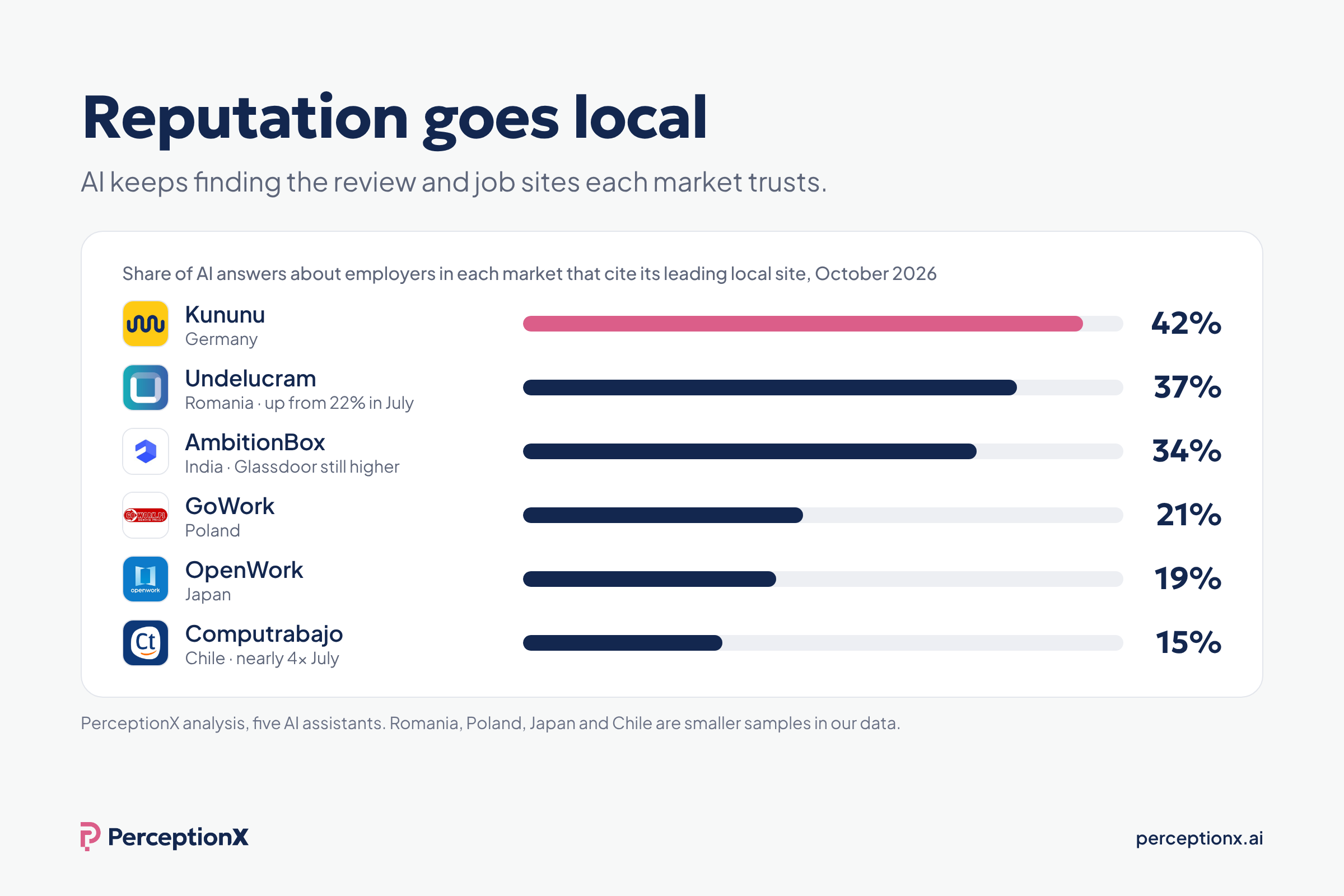
In many markets, local review sites matter more than global ones. In October 2026, kununu appeared in 42% of AI answers about employers in Germany, and AmbitionBox in 34% in India. Claim your profiles on the local review sites in every market where you hire, and respond there too.
Best for: global employers that need a strong reputation country by country.
5. Employee feedback and engagement surveys
Survey platforms let you measure engagement, employee satisfaction and employee net promoter score, and test whether your employer brand matches the employee experience. Survey data shows problems inside the company before they show up in online reviews.
Best for: finding the root causes behind negative reviews and checking whether recognition programs, leadership changes or new policies are working.
6. Social listening and media monitoring
Social listening tools track what people say about you as an employer on social media, forums and news sites. Even a free alert service catches news coverage and mentions that can shape online reputation.
Best for: early detection of reputation risks, such as a viral post or a layoff story, so you can respond before candidates do.
7. Employee advocacy tools
Employee advocacy tools help current employees share employee stories, job postings and company news. Authentic posts from employees build trust in ways company content cannot, and they add positive, current material for candidates and AI to find.
Best for: building a strong reputation for company culture and career growth through people, not campaigns.
How to choose the right employer reputation tools
- Start with measurement. Find out how you are seen today, in reviews, surveys and AI answers, before buying anything else.
- Cover the sources that matter in your markets. Prioritise the review sites and job platforms AI cites most where you hire.
- Make response someone's job. A review tool without a named owner will not improve your reputation.
- Connect it to hiring. Track how reputation moves alongside applications, offer acceptance and time to hire.
For a wider view of the stack, including content and job description tools, see our guide to employer branding tools and software.
How to manage employer reputation with these tools
Tools only work as part of a routine. Strong employer reputation management usually follows the same cycle:
- Monitor employee reviews, social media and AI answers every month.
- Respond to online reviews, positive and negative, within days, not weeks.
- Fix the cause. Share recurring themes from employee feedback with the leadership team and act on them.
- Update the evidence. Keep career pages, job descriptions and company profiles accurate, so AI and candidates find current information.
- Measure brand perception every quarter and report the change.
For what is changing next, see our employer reputation trends for 2027.
Key takeaways
- Employer reputation management software monitors, measures and improves how current and potential employees see you.
- The best stack combines an AI employer reputation tool, review management, local review sites, employee feedback, social listening and employee advocacy.
- AI assistants now shape what job seekers believe about employers, so measuring AI answers belongs alongside review monitoring.
- A tool is only as good as the routine behind it: monitor, respond, fix, update and measure.
Frequently asked questions
What is employer reputation management software?
Employer reputation management software helps a company monitor, measure and improve how job seekers, current employees and the market see it as a place to work. It typically covers employee reviews, employee feedback, social media and, increasingly, what AI assistants tell candidates.
What are the best AI employer reputation tools?
AI employer reputation tools measure how assistants such as ChatGPT, Gemini, Perplexity and Google's AI answers describe an employer to candidates. PerceptionX tracks these answers in every market and for every type of role, shows whether AI recommends you and what it says about you, and names the websites the answers come from.
How do you manage employer reputation?
Monitor employee reviews, social media and AI answers regularly, respond to online reviews quickly, share recurring themes from employee feedback with leadership, keep career pages and company profiles accurate, and measure brand perception every quarter.
How do you respond to negative employee reviews?
Respond publicly, promptly and without arguing. Thank the reviewer, acknowledge the issue, explain what is changing if anything is, and invite a private conversation. Then fix the underlying cause, because candidates and AI assistants read the pattern, not just one review.
Is employer reputation the same as employer brand?
No. Employer brand is what a company says about itself as a place to work. Employer reputation is what people actually believe, shaped by reviews, employees, news and AI answers. Employer reputation management closes the gap between the two.

Find out how AI is shaping your employer brand — and what you can do about it.